CHOLELITHIASIS
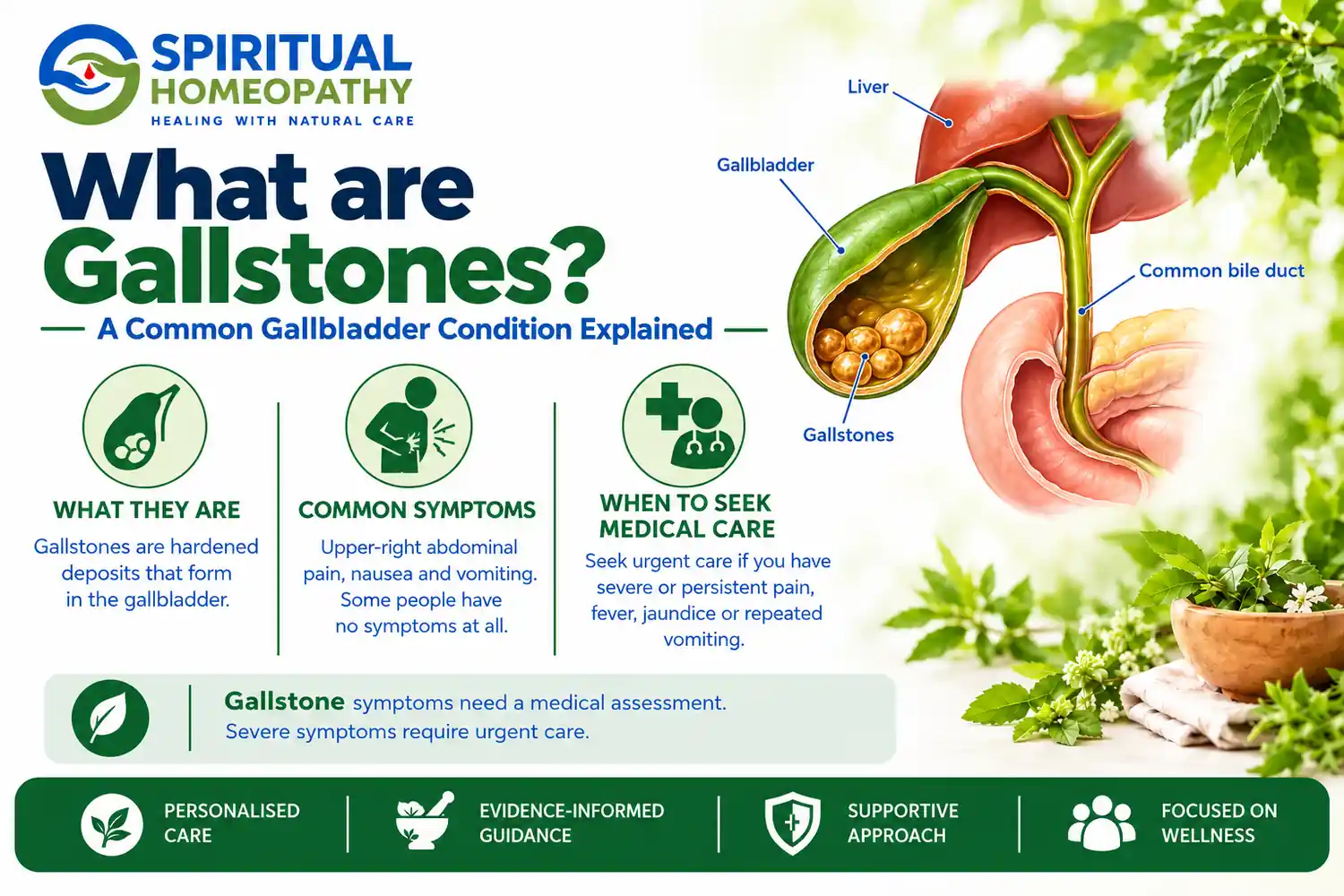
Your gallbladder may be one of the smallest organs in your digestive system, but when these gall bladder develop gallstones, it has very significant impact on your overall health. These gallstones keep growing gradually in the body without knowing. Many gallstones remain silent and cause no symptom but when these stone block the bile flow, it causes severe pain, vomiting.
WHAT IS CHOLELITHIASIS?
Cholelithiasis are commonly known as gallbladder stones, are hard deposits of cholesterol, bile pigments, calcium salts that form inside the gall bladder. Some develop single stone while others have multiple stones. It is more common in obese women, individuals over 40 years of age.
TYPES OF GALLSTONES
1.CHOLESTEROL STONES
Most common type stones
Forms due to excess cholesterol in bile
Usually yellow in colour
2. PIGMENT STONES
They form due to excess of bilirubin
Small dark brown or black in colour
Common in liver and chronic infections
3.MIXED STONES
They contain cholesterol, bile pigment and calcium salt
Commonly seen in liver and gall bladder long standing disease
WHAT CAUSES GALLSTONES?
- Family history
- Excess bilirubin production
- Incomplete gallbladder emptying
- Blockage and obstruction in gall bladder
- Liver disease
- Obesity
- High cholesterol diet
HOW GALLSTONES ARE FORMED?
Risk factors
⬇️
Cholesterol or bilirubin increases in bile
⬇️
Bile loses its normal balance
⬇️
Formation of tiny crystals
⬇️
Aggregate to form bile sludge
⬇️
Sludge hardens into small stones
⬇️
Stone enlarges over time
⬇️
Stone blocks the bile outlet
⬇️
Inflammation, pain, infection
CLINICAL FEATURES
- Steady Pain in upper right abdomen
- Pain after eating fatty meals
- Radiating pain to right shoulder blade
- Bloating
- Indigestion
- Nausea, vomiting
- Fever
- Jaundice
HOW TO RULE OUT CHOLELITHIASIS?
- Ultrasound abdomen
- Liver function test
- Complete blood count
- MRCP and CT Scan
- ERCP
ROLE OF HOMEOPATHY
In homeopathic practice, we give treatment based on individualisation considering physical symptoms, mental characteristics, medical history and overall constitution rather than focusing solely on the gallstones. We adopt holistic and individualized approach in gallstones management. According to homeopathy, we believe that it is associated with unresolved emotional conflicts involving anger, bitterness. The ultimate feeling of unable to digest the situation. These long standing emotional stress will influence biological changes within gallbladder. Our case taking starts right when the patient comes to the doctor. We give constitutional medication based on the personality of the patient.
| MYTHS | FACTS |
| Only older people get gallstones | Gallstones can develop at any age. |
| If no pain, no gallstones | Not all gallstones cause pain, most of them are silent |
| Only large gallstones are dangerous | Small stones can be more dangerous because they cause obstruction or pancreatitis |
| All abdominal pain after eating caused by gallstones | No, it can occur with gastritis, acid reflux, peptic ulcers, pancreatitis and other digestive conditions. |
| Why does gallstone pain often occur at night | Gallbladder contractions after evening meal triggers pain |
| Can fasting increase the risk of gallstones | Prolonged fasting reduce gallbladder emptying and increases likelihood of stone formation |
| If pain goes away, the gallstones are gone | Gallstones pain may stop when blockage is relieved, but stones usually remain in gallbladder. |
👍DO’S
- Stay well hydrated
- Eat small, frequent meals
- Prefer steamed, boiled, grilled foods
- Choose a balanced low fat diet
- Maintain healthy body weight
❌DON’TS
- Avoid fatty and fried food
- Don’t skipping meals
- Limit caffeine and alcohol
- Avoid overeating
- Avoid excessive sugary foods
- Don’t self medicate
🥗FOODS TO EAT
- Green leafy vegetables- spinach, methi, drumstick leaves, amaranth leaves
- Low fat vegetables- bottle gourd, ridge gourd, snake gourd, pumpkin, beans, cauliflower
- Plant based protein-moong dal, rajma, soya, masoordal
- Low fat dairy- skimmed milk, low fat curd, buttermilk
- Healthy oils- olive oil, groundnut oil, mustard oil
- Whole grains- oats, whole wheat roti, brown rice, quinoa
🚫FOODS TO AVOID
- High fat foods- butter, ghee, cream, full fat milk
- Deep fried foods
- Processed and fast food
- Sugary foods- cakes, pastries, ice cream
- Beverages and carbonated drinks
- Fatty meats
- Avoid excess alcohol intake
✨WHY TO CHOOSE SPIRITUAL HOMEOPATHY?
When it comes to managing cholelithiasis, every patient deserves care that is individualized because we don’t focus on the common symptoms of gallstones, we believe every patient complaints are unique. At spiritual homeopathy, we believe that treatment should go beyond addressing symptoms which aims in understanding the person as a whole considering his physical complaints, mental symptoms, lifestyle, stress. As one of the most trusted and highly rated homeopathy clinics in Hyderabad, we are committed to deliver holistic care to the patient by taking the case in detail which starts right after the patient enters the clinic, evaluation, individual treatment plan and ongoing support thoughout their healing journey. our clinic is led by dedicated homeopathic doctors with extensive clinical experience who help you in providing personalised treatment where we also give them the diet plan along with the treatment to overcome lifestyle diseases. Distance is never a barrier, at spiritual homeopathy we also provide courier service all over the country and across the globe to serve the patients
Book an Appointment: Schedule a consultation with Spiritual Homeopathy Clinics at our Dilsukhnagar, KPHB, or Nallagandla–Chandanagar branches. Call 9069 176 176 to book your appointment and discuss your healthcare concerns with our team.
❓FREQUENTLY ASKED QUESTIONS
No, kidney stones form in urinary system whereas gallstones form in digestive system within gallbladder from cholesterol or bilirubin.
Usually it starts after eating a heavy, high fatty meal because fat stimulates the gallbladder to contract, pushing the stones against bile duct opening.
Typically one attack lasts anywhere from 30 minutes to several hours before subsiding as the stone shifts away from duct opening.
Seek emergency medical care if you experience severe abdominal pain lasting more than 4-5 hours, high fever with chills, yellowing of skin or dark urine.
Yes, most frequently referred pain from gallbladder usually radiates to right shoulder blade or the upper middle back.
Usually no. only about 10-15% of gallstones contain enough calcium to be visible on a plain abdominal X-ray.
Yes, gallstones attacks often occur at night or after a heavy evening meal because gallbladder contracts during digestion.
Yes, some people experience early fullness, bloating, nausea or a reduced desire to eat especially post fatty meals.
Poor hydration may contribute indirectly by affecting bile concentration, although it is not the primary cause of gallstone formation.
Yes. Although it is uncommon, gallstones can occur at any age.
No, most gallstones stay inside gallbladder and never enter or block the bile duct.
The gallbladder shares nerve pathways with diaphragm and shoulders that causes referred pain.
Yes. Diabetes is associated with changes in gallbladder function and bile composition that may increase gallstone risk.
No, gallbladder sludge is a thick mixture of bile components that can sometimes resolve on its own or progress to gallstones.
Long term blockage of bile flow can reduce absorption of fat soluble vitamins (A,D,E,K) though it is uncommon and usually associated with significant biliary obstruction.
Pain starts suddenly when a gallstone blocks the normal flow of bile from the gallbladder.
Yes, many people have gallstones but never experience indigestion, nausea or abdominal pain.
Yes, both conditions commonly occur together especially in people with metabolic syndrome.
Stress doesn’t create gallstones, but it may influence digestion and eating habits which eventually triggers gallstone attack.
Yes, some people experience nausea or discomfort as their main symptom, although this is not specific to gallstones.
Gallstones doesn’t effect blood cholesterol, but cholesterol metabolism plays a role in forming many gallstones.
Female hormones particularly estrogen can increase cholesterol in bile and reduce gallbladder emptying increasing risk.
Spicy foods do not cause gallstones, but they may worsen digestive discomfort in some people.