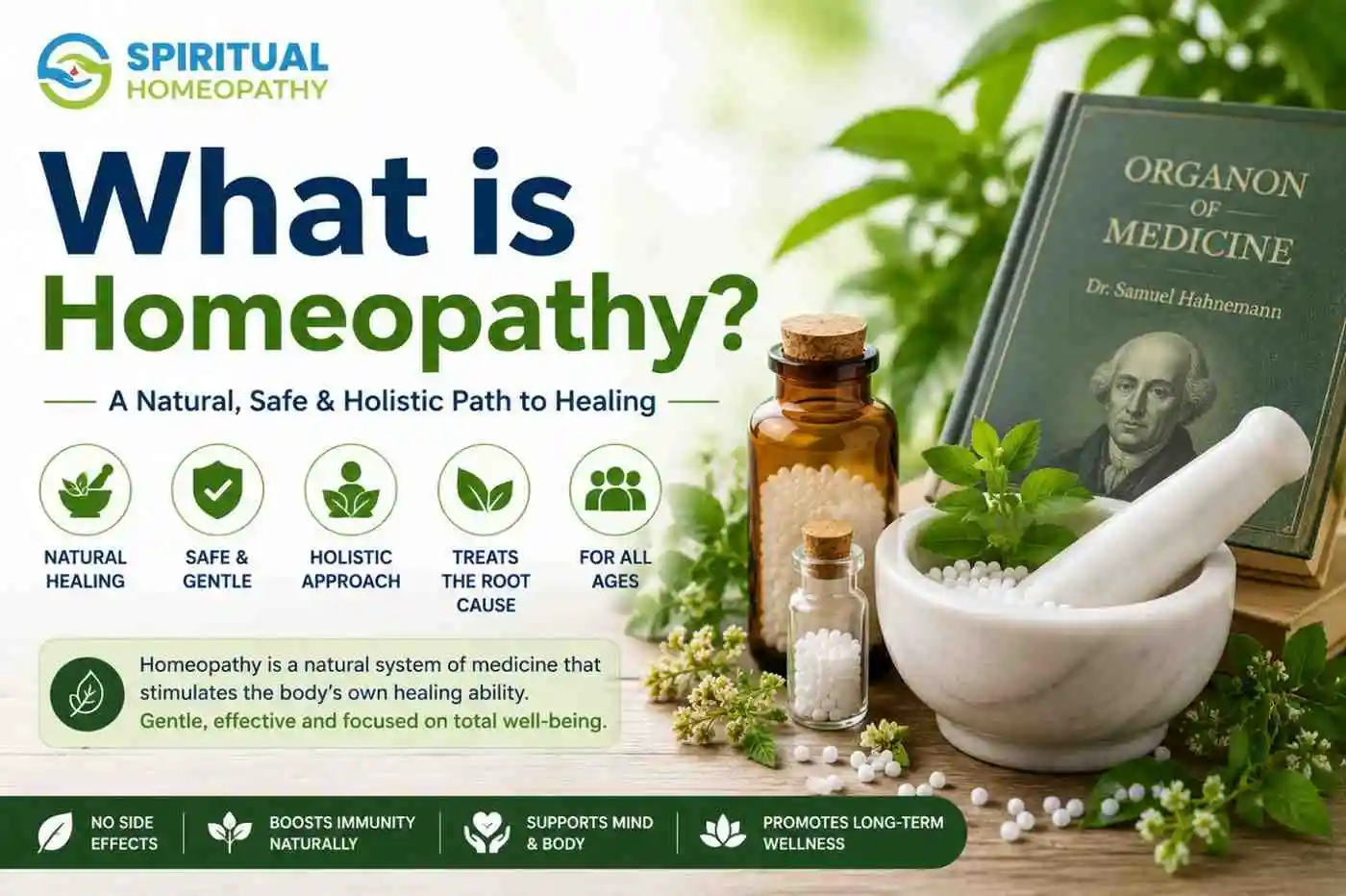
What is Homeopathy? Beyond the Pills and the Controversy
The Question That Divides Medicine
Let me start with a story.
A few years ago, my four-year-old nephew woke up in the middle of the night screaming. His ear was throbbing. His temperature was 102°F. His parents were frantic—do they rush to the ER for antibiotics? Or do they try something gentler?
A neighbor recommended a homeopathic remedy called Belladonna. Within thirty minutes of taking a few tiny sugar pellets, his fever began to drop. He fell asleep. By morning, the ear pain was gone.
Coincidence? Placebo? Or did those highly diluted pellets actually do something?
What is homeopathy? Depending on who you ask, it is either a gentle, holistic system of medicine that has healed millions for over 200 years—or it is pseudoscience that defies the laws of chemistry and physics.
I have spent months digging into the research, talking to practitioners, and even trying remedies myself. This guide is not here to sell you on homeopathy or to dismiss it. It is here to give you a clear, balanced, evidence-informed answer to the question: what is homeopathy, how does it claim to work, what does the science say, and should you consider it?
Let’s begin.
A Brief History: Where Did Homeopathy Come From?
Homeopathy was developed by a German physician named Samuel Hahnemann (1755-1843). He was deeply disillusioned with the medicine of his day—which included bloodletting, leeches, and toxic doses of mercury.
While translating a medical text, Hahnemann came across a claim that cinchona bark (which contains quinine, used for malaria) caused symptoms of malaria in healthy people. Intrigued, he took some himself and experienced fever, chills, and joint pain—symptoms remarkably similar to malaria itself.
This led him to formulate the first principle of homeopathy:
“Like cures like” (Similia Similibus Curentur).
A substance that produces symptoms in a healthy person can, when given in very small doses, cure similar symptoms in a sick person.
Hahnemann then experimented on himself and healthy volunteers—a process called “proving”—to document the symptom profiles of hundreds of substances, from plants to minerals to snake venoms.
Over two centuries later, homeopathy is practiced worldwide, particularly in India, Germany, France, and the United Kingdom. The World Health Organization estimates that homeopathy is used by over 200 million people globally .
The Core Principles of Homeopathy
To truly understand what is homeopathy, you need to grasp its three foundational pillars.
1. The Law of Similars (Like Cures Like)
This is the most distinctive principle. Conventional medicine often uses “opposites”: if you have a fever, you take a antipyretic to lower it. If you are constipated, you take a laxative.
Homeopathy flips this. If you have a fever with sudden onset, hot skin, and dilated pupils, a homeopath might prescribe Belladonna—a plant that, in full doses, causes those exact symptoms.
| Symptom | Conventional Approach | Homeopathic Approach |
|---|---|---|
| Insomnia from racing thoughts | Sedative to calm the brain | Coffea cruda (made from coffee, which causes alertness) |
| Poison ivy rash with blistering | Antihistamine or steroid | Rhus toxicodendron (poison ivy itself, diluted) |
| Nausea and vomiting from motion sickness | Antiemetic | Tabacum (made from tobacco, which causes nausea) |
2. The Principle of the Infinitesimal Dose (Dilution and Succussion)
This is where homeopathy becomes controversial.
Hahnemann believed that lower doses were actually more potent—but only if you shake the solution vigorously between each dilution. This process is called succussion.
Homeopathic remedies are labeled with potencies like 6X, 30C, or 200CK:
- X means a 1:10 dilution
- C means a 1:100 dilution
A 30C remedy has been diluted 1:100, thirty times in a row. Mathematically, this means the original substance has been diluted to 1 part in 10⁶⁰. That is far beyond Avogadro’s number—the point at which, statistically, not a single molecule of the original substance remains .
So what is in the remedy? Water, alcohol, and sugar pellets. Homeopaths argue that the water “remembers” the substance’s energetic signature. Critics say this defies basic chemistry.
3. Individualization (Treat the Person, Not the Disease)
Two people with the same diagnosis—say, migraines—may receive completely different homeopathic remedies. One might get Belladonna (throbbing pain, worse with light and noise). Another might get Iris versicolor (pain with nausea and visual disturbances).
This is perhaps the most valuable aspect of homeopathy. A good homeopath spends an hour with you, asking about your sleep, your dreams, your food cravings, your emotional patterns. Even skeptics often admit that this kind of deep listening is healing in itself.
What is Homeopathy? A Quick Comparison Table
| Aspect | Homeopathy | Conventional Medicine (Allopathy) |
|---|---|---|
| Core principle | Like cures like | Opposites treat (antipyretics for fever) |
| Dose | Highly diluted (often no molecules of original substance) | Molecular doses (mg to g range) |
| Approach | Individualized to the whole person | Standardized by diagnosis |
| Evidence base | Mixed; systematic reviews show little beyond placebo for most conditions | Strong for acute conditions and infections |
| Safety | Extremely safe (no toxicity) | Side effects common, especially with chronic use |
| Regulation | Varies by country; in India, it is integrated into national health system | Strictly regulated (FDA, EMA) |
| Cost | Generally low | Varies widely |
The Evidence: What Does Science Say?
This is where the debate gets heated. Let me give you the most balanced, up-to-date summary I can.
What Systematic Reviews and Meta-Analyses Conclude
The most comprehensive analysis to date comes from the Australian National Health and Medical Research Council (NHMRC) in 2015. After reviewing 225 individual studies and 57 systematic reviews, they concluded:
“There is no reliable evidence that homeopathy is effective for any health condition.”
However, critics of the NHMRC report noted that it excluded several positive studies and used overly narrow criteria.
A more recent (2022) meta-analysis published in Systematic Reviews examined homeopathy for upper respiratory tract infections in children. The authors found that while some studies showed benefit, the overall quality of evidence was low, and they could not make firm recommendations .
Conditions with the Most Promising (Though Still Weak) Evidence
- Allergic rhinitis (hay fever): Several randomized trials show that individualized homeopathy may reduce symptoms compared to placebo .
- Childhood diarrhea: A large trial in Nicaragua (1994) found that homeopathic treatment reduced duration of diarrhea by about 0.7 days .
- Post-operative recovery: Some studies suggest homeopathic Arnica may reduce bruising and pain after surgery, though more recent trials have been negative .
- Anxiety and mild depression: The 2025 study mentioned in our anxiety blog post showed no benefit over placebo in a rigorous trial.
The Placebo Question
Even the most vocal homeopathy critics acknowledge that patients often report feeling better after treatment. The question is why.
- The consultation effect: Homeopaths spend 45-90 minutes listening. That alone reduces stress and activates self-healing.
- Expectation and belief: If you believe the sugar pill will help, your brain releases endorphins and changes pain perception.
- Natural history: Many conditions (acute viral infections, mild sprains, even some chronic pain) improve on their own.
My perspective after reviewing the evidence: For serious, life-threatening conditions (bacterial pneumonia, appendicitis, heart attack), homeopathy has no place. It is dangerous to delay proven care. But for mild self-limiting conditions, or as an adjunct to conventional care for chronic symptoms, homeopathy is safe and may provide genuine benefit—whether through specific effects, placebo, or the therapeutic encounter itself.
What Happens During a Homeopathic Consultation?
If you are still curious about what is homeopathy in practice, let me walk you through a real consultation.
A patient walks in with chronic migraines. A conventional doctor might ask: “How often? Where is the pain? Any aura? Here’s a prescription for sumatriptan.”
A homeopath asks very different questions:
- What time of day do the migraines start? (Morning? Evening? 3 AM?)
- What makes them better? (Pressure? Cold? Lying in a dark room?)
- What makes them worse? (Light? Noise? Movement? Stress?)
- What do you crave during the migraine? (Salt? Sweets? Nothing?)
- How does the pain feel? (Throbbing? Stabbing? Band-like pressure?)
- What is your general temperament? (Irritable? Weepy? Clingy? Withdrawn?)
From this rich tapestry, the homeopath selects a single remedy. You take it in tiny sugar pellets, usually one dose and then wait to see the response.
This individualized approach is why some people feel deeply heard for the first time in their medical journey.
Common Homeopathic Remedies and Their Traditional Uses
| Remedy | Source | Traditional Indications |
|---|---|---|
| Arnica montana | Mountain daisy | Bruising, muscle soreness, post-surgical recovery |
| Belladonna | Deadly nightshade plant | Sudden high fever, throbbing headaches, red face |
| Nux vomica | Strychnine tree seed | Hangovers, digestive complaints from overeating/alcohol |
| Ignatia amara | St. Ignatius bean | Grief, emotional shock, lump in throat |
| Pulsatilla | Wind flower plant | Changing symptoms, clingy mood, hormonal imbalances |
| Sulphur | Elemental sulfur | Itching, burning sensations, worse from warmth |
| Lycopodium | Club moss | Right-sided complaints, digestive bloating, performance anxiety |
| Arsenicum album | Arsenic trioxide | Restlessness, anxiety about health, burning pains better from warmth |
Safety, Regulation, and Risks
Is Homeopathy Safe?
For over-the-counter homeopathic remedies (typically 6X to 30C), the risk of toxicity is essentially zero because the original substance is diluted beyond detection. This is why homeopathy is often used in infants, pregnant women, and the elderly.
However, there are significant risks:
- Delaying effective treatment: The most dangerous aspect of homeopathy is when it is used instead of proven medical care. A parent giving homeopathic pellets for a child with bacterial meningitis instead of going to the ER is a tragedy.
- Contaminated products: In 2016-2017, the FDA found unacceptable levels of belladonna (a toxic substance) in some homeopathic teething tablets .
- Misleading claims: Some homeopathic products claim to prevent or treat malaria, cancer, or COVID-19. There is no evidence for this.
Regulation by Country
- India: Homeopathy is a recognized and integrated system of medicine. There are over 200 homeopathic medical colleges and a government ministry for AYUSH (Ayurveda, Yoga, Unani, Siddha, Homeopathy).
- Germany: Homeopathy is covered by some health insurance. Many physicians practice both conventional and homeopathic medicine.
- United Kingdom: The NHS no longer funds homeopathy, but it remains available privately.
- United States: The FDA regulates homeopathic products but has recently increased enforcement against unsubstantiated claims.
Unique Insights: The Forgotten Value of Homeopathy
After researching this deeply, I have come to a nuanced conclusion. The question what is homeopathy cannot be answered solely by chemistry or clinical trials. Because homeopathy offers something that evidence-based medicine often lacks:
- Time and attention: A 15-minute rushed appointment cannot match a 90-minute homeopathic intake. The therapeutic alliance itself heals.
- Placebo as medicine: If a sugar pill helps someone’s chronic fatigue or anxiety, and there is no better conventional option, is that worthless? Many patients would say no.
- Integration, not opposition: The most thoughtful practitioners I have met use homeopathy alongside conventional medicine—not as a replacement. They treat strep throat with antibiotics and use Belladonna for the fever, Arnica for the sore throat, and a constitutional remedy to prevent recurrence.
The bitter debate—homeopathy versus science—misses the point. A wiser question is: for what conditions, in which patients, under what circumstances, might homeopathy offer benefit that outweighs its risks? And for mild, chronic, or functional disorders where conventional medicine has little to offer, the answer might be “often enough to keep an open mind.”
Should You Try Homeopathy?
| Consider homeopathy if… | Do not use homeopathy if… |
|---|---|
| You have a mild, self-limiting condition (colds, minor injuries, seasonal allergies) | You have a serious, life-threatening condition (cancer, sepsis, heart attack, stroke) |
| You have chronic symptoms that haven’t responded to conventional treatment (IBS, chronic fatigue, mild anxiety) | You are replacing prescribed medication without doctor supervision |
| You want a holistic, individualized approach | You need rapid, predictable relief (antibiotics for pneumonia, insulin for diabetes) |
| You are willing to see it as complementary, not alternative | You believe homeopathy can “dissolve” tumors or cure vaccine-preventable diseases |
Always tell your primary care doctor about any homeopathic remedies you are taking—not because they are dangerous, but because they need the full picture of your health journey.
Conclusion: An Open Mind, Not an Empty One
So, what is homeopathy?
It is a 200-year-old system of medicine based on “like cures like” and extreme dilution. It has millions of devoted followers and fierce scientific critics. The best evidence suggests that for most conditions, it works no better than placebo—but placebo is real, and the profound listening of a homeopathic consultation is something many patients never experience in conventional clinics.
My personal take? Use homeopathy for what it is good at: mild complaints, chronic functional issues, and as a companion to evidence-based care. Never use it as a substitute for antibiotics, surgery, or emergency medicine. And always, always keep asking questions.
The most dangerous medicine is the one you take uncritically. The wisest patient is the one who understands their options—and chooses with eyes wide open.
Have you tried homeopathy? Did it help you, or did you feel it was just a sugar pill? Share your honest experience in the comments—your story could help someone make a more informed decision.
Subscribe to our newsletter for weekly deep dives into natural medicine, evidence-based wellness, and respectful conversations about what actually helps people heal.
Disclaimer: This article is for informational purposes only and does not constitute medical advice. Homeopathy should never replace emergency or conventional medical treatment for serious conditions. Always consult a licensed healthcare provider before starting any new treatment, including homeopathy.