ESCHERICHIA COLI
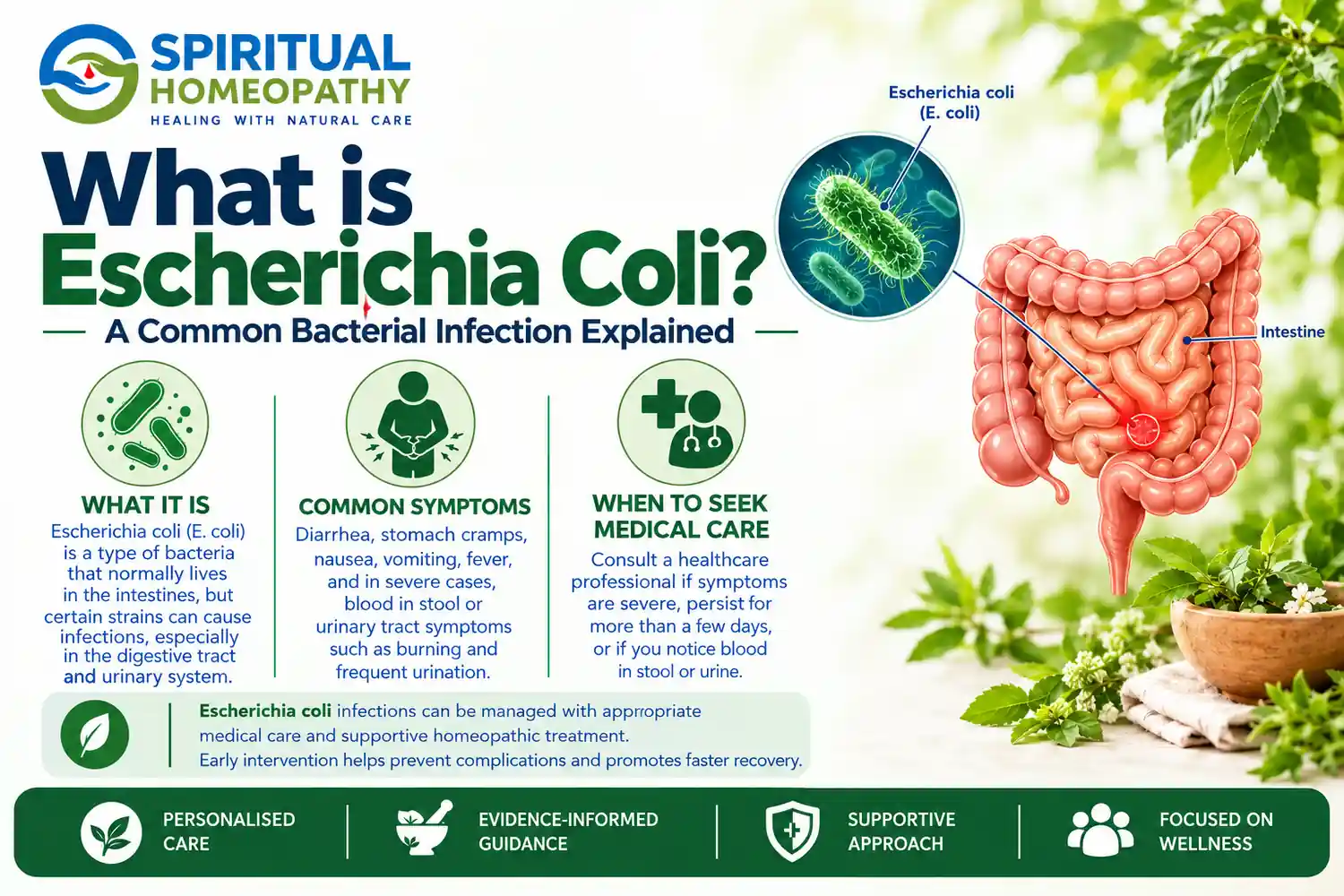
Escherichia coli is commonly known as E. coli, it is a group of bacteria that commonly found in intestines which usually cause gastrointestinal tract infections. It naturally inhabits in the intestines of human and many animals but few strains cause diseases.
E.coli infections occur through contamination of
1. food
2. drinking water
3. dairy products
4. undercooked meat
5. undercooked vegetables
HOW INFECTION SPREADS?
Stool expelled out with infection
⬇
Contaminates through food, water
⬇
Ingestion of contaminated food
⬇
Bacteria enter gastrointestinal tract
⬇
Colonisation
⬇
Multiplication of bacteria
⬇
Diarrhoea, abdominal cramps
SIGNS & SYMPTOMS
- Abdominal cramps
- Diarrhoea
- Nausea
- Vomiting
- Stomach pain
- Loss of appetite
- Low fever
HOW TO DIAGNOSE IT?
- Stool test
- Urine culture
- Blood culture
- Complete blood picture
ROLE OF HOMEOPATHY
Homeopathic practitioner looks beyond the disease and considers the individual’s overall symptom pattern and general well-being while selecting an individualized treatment approach. In cases of E. coli infection, attention may be given to the person’s presenting complaints, mental and emotional state, lifestyle, stress factors, and overall health. According to homeopathy, we believe mental conflict plays major role in every disease. Mental conflicts like indigestible situation in family, anger, rage or difficulty in processing a situation can cause gastro intestinal infections. This holistic approach aims to provide individualized care based on the person as a whole, while supporting general well-being during recovery. Alongside appropriate medical management, personalized homeopathic care focuses on understanding the individual’s unique symptom picture and health needs, with the goal of supporting overall wellness and a comfortable recovery.
| MYTH | FACT |
| All e. coli bacteria are harmful | e. coli normally live within intestine but few strains are harmful |
| If food looks fresh and doesn’t smell, it is safe | Contaminated food may look fresh and normal |
| Only children can get this infection | No, it can affect any age group |
| You can get e coli only through food | No, it can occur through contaminated water, environment. |
| Once symptoms improve, you can eat junk as usual | No, maintaining adequate fluid intake and eating hygiene food is very important post infection. |
✅DO’S
- Choose simple food
- Stay well hydrated
- Maintain good hygiene
- Practice safe food handling
- Eat healthy food
❌DON’TS
- Do not self medicate
- Avoid eating junk food
- Don’t eat undercooked food
- Don’t eat raw vegetables
- Don’t share towels, clothes
👍FOODS TO CONSUME
- Soft foods- kichdi, soup, boiled potato
- Well cooked vegetables- pumpkin, bottle gourd, carrot, potato, sweet potato
- Fruits- banana, boiled apple, melon
- Cereals- oats, rice porridge, plain toast
- Protein foods- moong dal, tofu, paneer
- Probiotics- yogurt, curd
- Adequate hydration
🚫FOODS TO AVOID
- Avoid fried and fatty foods
- Avoid very spicy foods
- Avoid alcohol
- Avoid excess caffeine
- Avoid sugary drinks
- Avoid eating raw foods like salads
✨WHY TO CHOOSE SPIRITUAL HOMEOPATHY?
At Spiritual Homeopathy, we believe that managing an E. coli infection should go beyond digestive symptoms. Every individual is unique, and our approach focuses on understanding the person as a whole—including their presenting symptoms, overall health, lifestyle, dietary habits, and emotional well-being. we believe in providing individualized, patient-centred care in a compassionate and supportive environment. Our goal is to support overall well-being and recovery while helping patients understand the importance of appropriate hydration, nutrition, hygiene, and timely medical evaluation when required. As one of the best homeopathic clinics in Hyderabad, Spiritual Homeopathy is committed to providing personalized consultations with experienced practitioners. We offer convenient online consultations across India and worldwide, making individualized homeopathic care accessible regardless of location. Your health deserves thoughtful attention, personalized care, and a confidential space where your concerns can be heard.
Book an Appointment: Schedule a consultation with Spiritual Homeopathy Clinics at our Dilsukhnagar, KPHB, or Nallagandla–Chandanagar branches. Call 9069 176 176 to book your appointment and discuss your healthcare concerns with our team.
❓FREQUENTLY ASKED QUESTIONS
No. Most E. coli strains are harmless and normally live in the intestinal tract. Certain strains, however, can cause disease.
Yes. Several types of E. coli can cause diarrhoeal illness, including watery or bloody diarrhoea depending on the strain.
Yes. Certain infections, particularly STEC, can lead to HUS, which may cause serious kidney complications.
No. Many diarrhoeal E. coli infections resolve without antibiotics. In suspected STEC infection, antibiotics may increase the risk of HUS.
Good hand hygiene, safe drinking water, proper food preparation, thorough cooking and avoiding unpasteurized products can reduce the risk.
Yes, sometimes due to bad hygiene, contaminated vegetables and water can still cause e. coli infection.
No, depending on the type of strain symptoms vary. Some infections may show no symptoms and few cause dysentery.
Yes, drinking contaminated water can cause the infection.
Yes. Previous infection does not necessarily provide lasting protection against all E. coli strains.
Freezing generally does not reliably kill E. coli; it can survive in frozen foods and may become active again after thawing.
Food that is thoroughly cooked is much safer, but contamination can occur after cooking through unwashed hands, utensils, cutting boards, or other surfaces.
Yes. Contaminated drinking water is an important potential source of intestinal E. coli infection.
Yes. Some infections can produce mild or no noticeable symptoms, allowing transmission to occur without the person realizing they are infected.
Certain strains can cause complications beyond diarrhea, including dehydration and, in some cases, hemolytic uremic syndrome (HUS).
Yes. If a cutting board or utensil is contaminated and then used for ready-to-eat food, bacteria can be transferred through cross-contamination.
Yes. Thorough handwashing is one of the key measures for reducing the spread of E. coli, particularly after using the toilet, changing diapers, handling animals, and before preparing or eating food.
Yes. While many pathogenic strains cause intestinal illness, some E. coli strains can cause infections in other parts of the body, including the urinary tract.
Bloody diarrhea can indicate an inflammatory or invasive intestinal infection, including certain E. coli infections, and warrants medical evaluation.
Hydration is important for preventing dehydration, but water does not necessarily eliminate the underlying infection. Treatment depends on the type and severity of infection.
Yes. Some people may continue shedding bacteria in their stool after symptoms have improved, making careful hygiene important during recovery.
No. Previous infection does not provide reliable protection against all E. coli strains.
It can cause abdominal discomfort, cramping and sometimes bloating, although these symptoms are not specific to E. coli.
Typical intestinal E. coli infections more commonly cause diarrhea. Constipation is not a characteristic symptom and may suggest another cause.
Yes. Vomiting can occur, although diarrhea and abdominal cramps are more typical symptoms of many intestinal E. coli infections.